
NEXT SCIENCE Technology, Product & R&D Updates

製品・技術と開発の取り組み
How many months does it take for gasoline to degrade? How to identify old gasoline, whether it can be revived, and precautions for long-term storage
Gasoline degrades over time. Even with proper storage, the general shelf life is about six months. We will cover how to identify old gasoline, whether you can top it off or revive it with additives...
製品・技術と開発の取り組み
What are the disadvantages of gasoline additives? Precautions for overuse, combining products, and proper usage.
We explain the disadvantages of gasoline and fuel additives, focusing on overuse, combined use, frequency of use, compatible fuels, and precautions in the event of a breakdown. We also outline how ...
製品・技術と開発の取り組み
Do you add fuel additives every time? Usage frequency, timing, and precautions for overuse
Should I add fuel additives every time I refuel? The frequency depends on whether it's a detergent type or a continuous-use type. We explain the timing for adding them, precautions regarding overfi...

製品・技術と開発の取り組み
0W-20 vs. 5W-30: The Relationship Between Engine Oil Viscosity, Fuel Efficiency, and Friction
What is the difference between 0W-20 and 5W-30? We'll explain the differences in viscosity characteristics at low and high temperatures, fuel efficiency, friction resistance, and engine protection ...

製品・技術と開発の取り組み
Engine Oil Additives: Do They Work? Explaining Effects, Types, Benefits, and Precautions
Are engine oil additives truly effective? We'll provide an easy-to-understand explanation of the types and roles of additives, such as friction reduction, wear prevention, cleaning, and viscosity a...

製品・技術と開発の取り組み
What is friction loss? The mechanism of power loss and frictional resistance in engines and drivetrains.
Friction loss refers to the energy lost due to friction in the engine and driveline. This article provides an easy-to-understand explanation of the resistance generated by pistons, transmissions, b...
製品・技術と開発の取り組み
What Is Accelerator Response? Reasons for Delayed Response and the Mechanism Behind the "Instant Acceleration" Feeling
Accelerator response refers to how quickly a car reacts to accelerator input. We will explain the causes of delayed response from the perspectives of electronic throttle, torque characteristics, tu...
製品・技術と開発の取り組み
Why Is My Car Accelerating Slowly? 7 Checks for Sluggish or Heavy Acceleration
Car accelerating slowly or feeling heavy? Start with seven checks: tire pressure, air filter, ignition, engine oil, AT/CVT fluid, warning lights, and brakes/tires.
製品・技術と開発の取り組み
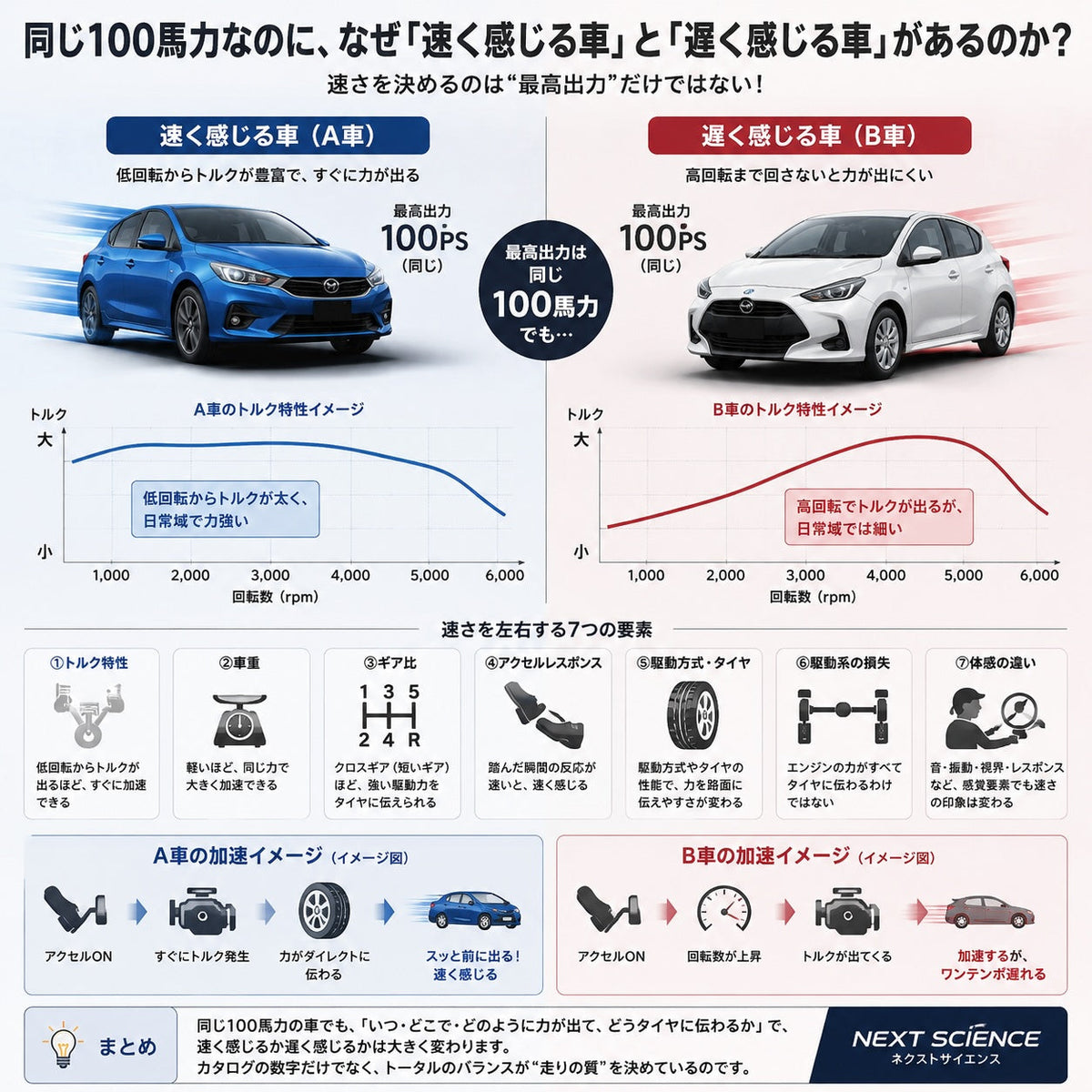
Why do some 100-horsepower cars feel fast while others feel slow?
Even two cars with the same 100 horsepower don't necessarily have the same acceleration feel or speed. We'll explain the "differences in speed" that aren't apparent from catalog specifications alon...