
GERHON
GERHON Fuel Conditioning for Gasoline | Support Your Car's Intended Condition
Before you choose
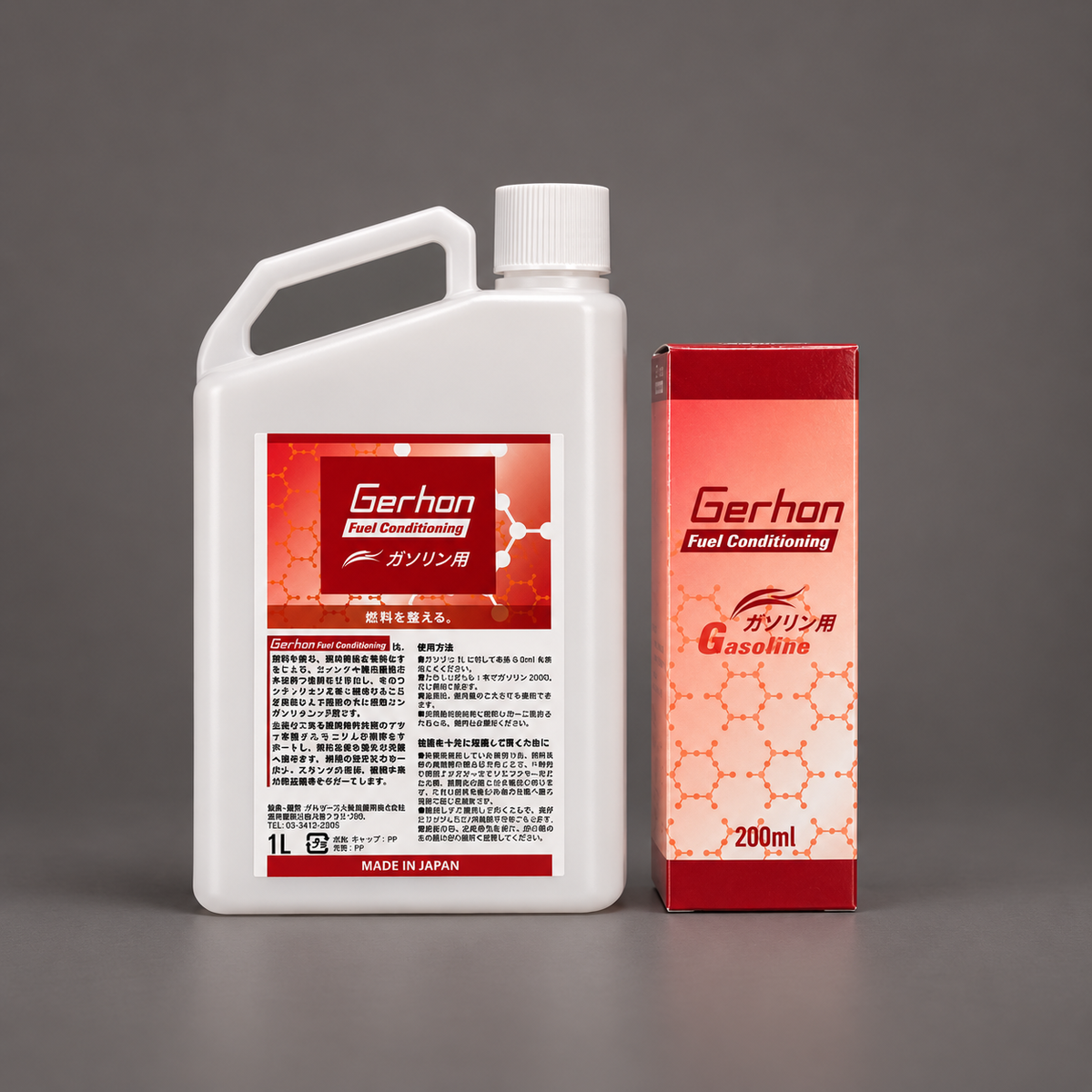
For gasoline. Use 10 mL per 20 L of fuel (0.5 mL per litre).
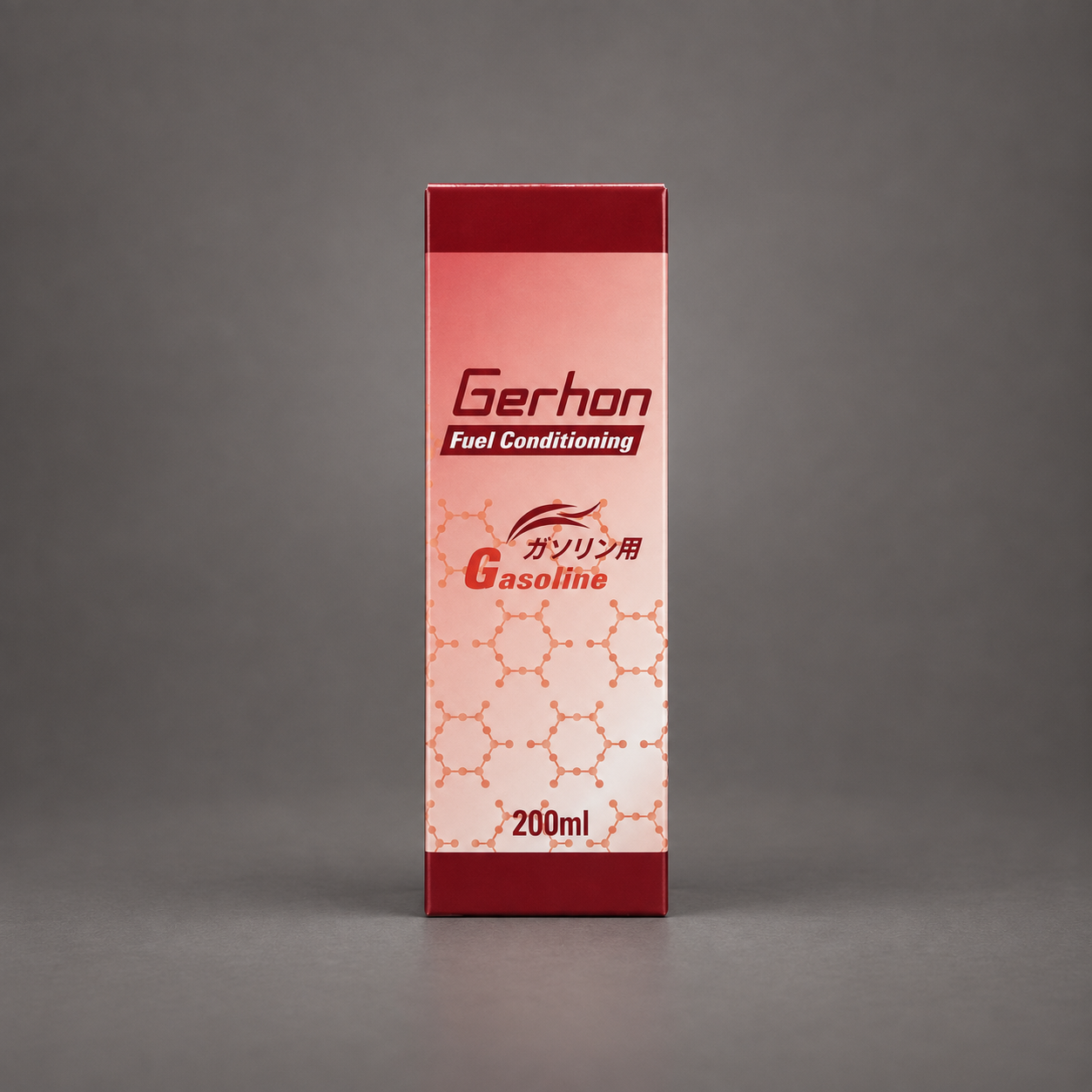
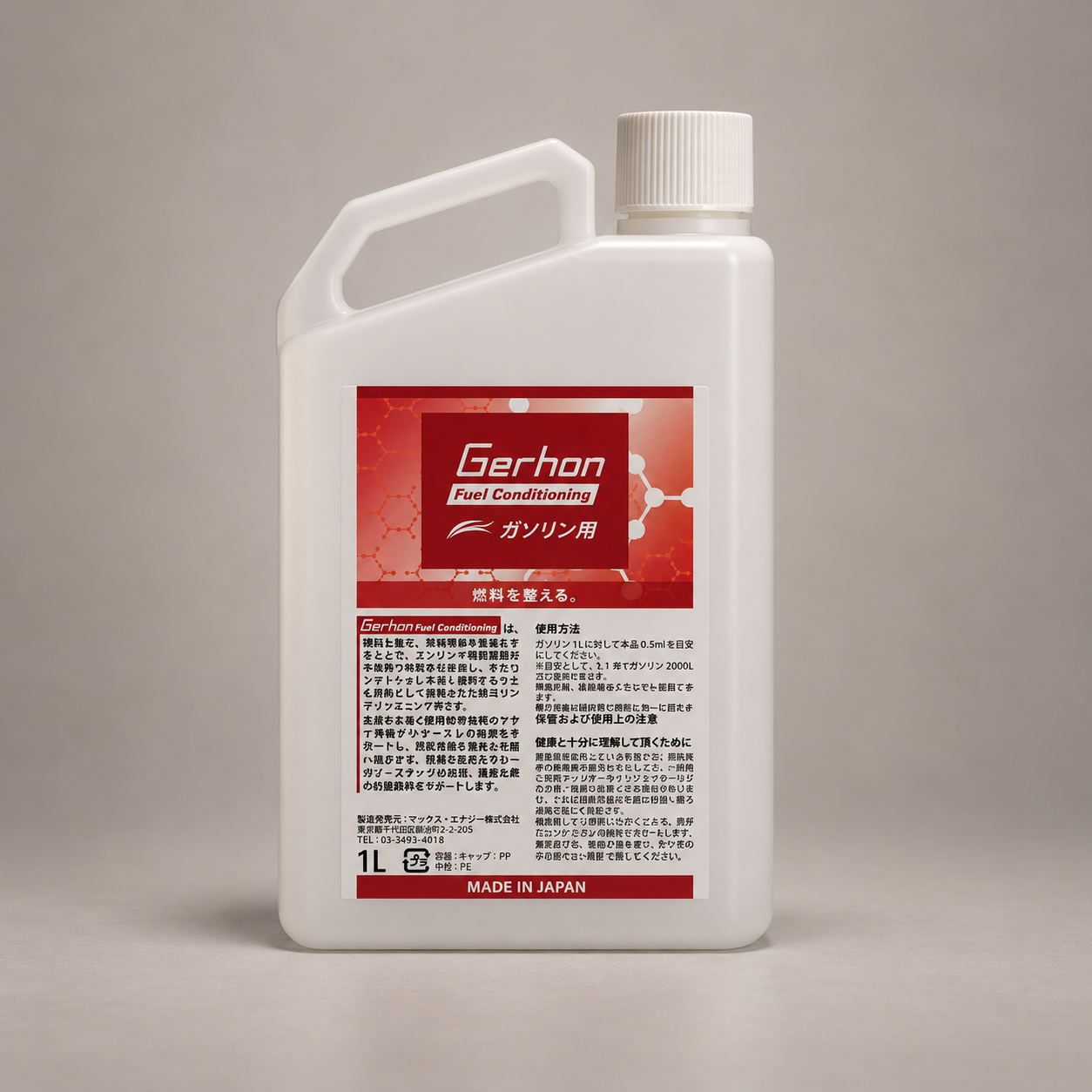
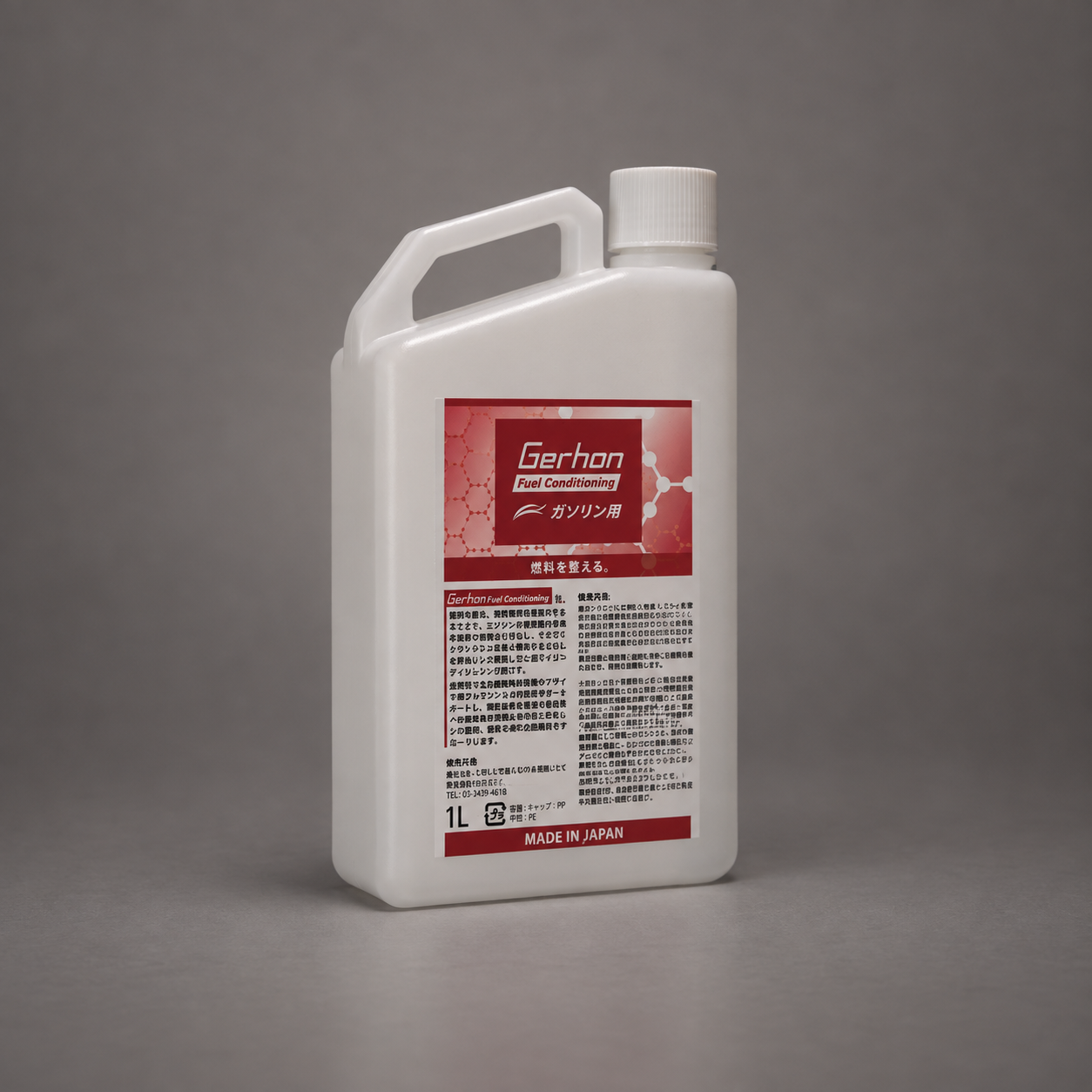
200 mL treats approximately 400 L of fuel. 1 L treats approximately 2,000 L. Choose a bottle size for the amount of fuel you use.
Precautions and evidence
Older vehicles may need fuel-system inspection or cleaning. The published historical tests describe earlier GERHON products, which were improved and developed into the current range; they do not guarantee the same results for the current products.
Shipping within Japan only
This is a liquid product and cannot be shipped internationally.
Keep enjoying the car you care about.
You value your car and want to keep driving it for as long as possible.
You want to keep enjoying its smoothness and the feeling when you press the accelerator.
You may pay close attention to engine oil and component maintenance, yet give less thought to the fuel burning inside the engine every day.
That is where GERHON Fuel Conditioning focuses.
Condition the fuel, rather than change the engine.
That is the GERHON approach.
A maintenance approach that starts with fuel
GERHON Fuel Conditioning for Gasoline is a fuel conditioner intended to support the engine in maintaining its intended condition by conditioning gasoline and maintaining a favorable combustion environment.
It uses Asai organic germanium as its principal ingredient.
GERHON does not aim to force engine performance beyond its intended level.
It aims to condition the fuel and combustion environment so the car can more readily deliver its inherent performance and maintain that condition over time.
Not adding performance, but supporting the intended condition.
Another option for looking after your car.
Recommended for drivers who:
Want to keep and care for their car over the long term.
Pay attention to everyday engine condition.
Want a simple maintenance step at refueling.
Want to maintain an enjoyable driving condition for city use, long drives and touring.
Changes recorded in historical tests
The current GERHON Fuel Conditioning for Gasoline was developed by improving and building on the GERHON used at that time.
To explain its technical background, we present a 1985 gasoline-vehicle fuel-economy and emissions record and a separate 1993 used-oil analysis. The published figures were measured using the products and conditions of that period.
1985: Japanese 10-mode tests on the same gasoline vehicle
| Measurement | 1985/8/2 | 1985/11/29 |
|---|---|---|
| Fuel economy (km/L) | 9.9 | 12.3 |
| CO (g/km) | 10.90 | 0.40 |
| HC (g/km) | 0.78 | 0.07 |
| CO2 (g/km) | 220 | 192 |
The table shows the first and final measurements from repeated tests on the same vehicle. Intermediate readings and odometer values are included in the technical-records page below.
1993: used-oil samples after separate 10,000 km runs before and after GERHON use
A separate analysis recorded differences including pentane insolubles falling from 0.69% to 0.59% and toluene insolubles from 0.59% to 0.52% in the sample after GERHON use.
These GERHON technical records are connected to the development of today's GERHON Fuel Conditioning for Gasoline. The values were measured with the products and test conditions of their time. They do not guarantee the same percentage changes with the current product, identical outcomes for every vehicle or reductions in all exhaust-gas components.
Read gasoline test conditions and measurements
Source: the supplied GERHON Gasoline Technical Records, Selected Evidence Edition. The selection presents records in which improvement-direction measurements were observed.
Simply add it when refueling
Use 0.5 mL of GERHON per 1 L of gasoline. The specified amount for 20 L of gasoline is 10 mL.
It can be added before or after refueling.
It mixes uniformly with gasoline within a short time after addition, so stirring is not required.
One 200 mL bottle treats approximately 400 L of gasoline.
One 1 L bottle treats approximately 2,000 L.
Add it to your usual refueling routine without introducing a separate maintenance task.
Sizes and Included Measuring Tools
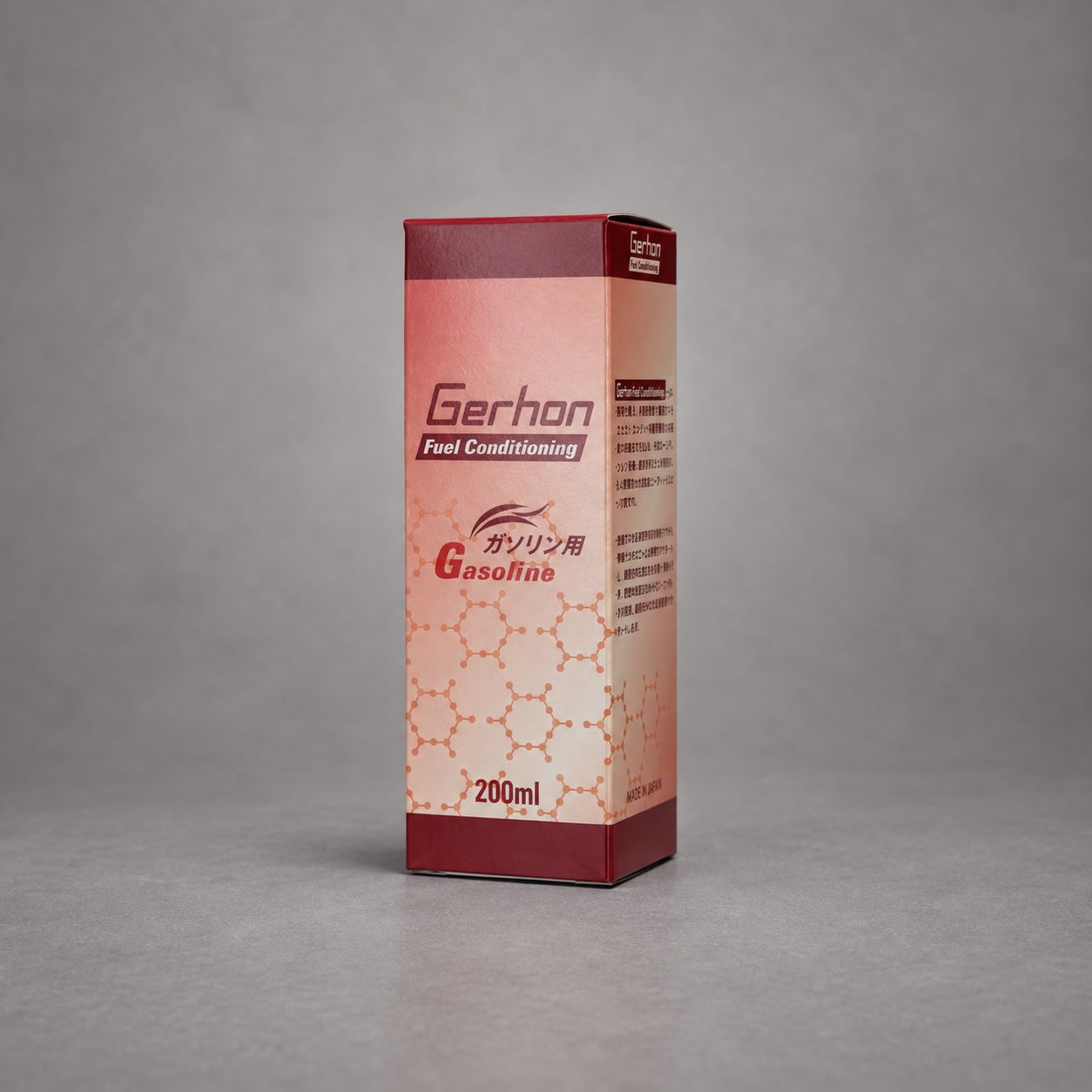
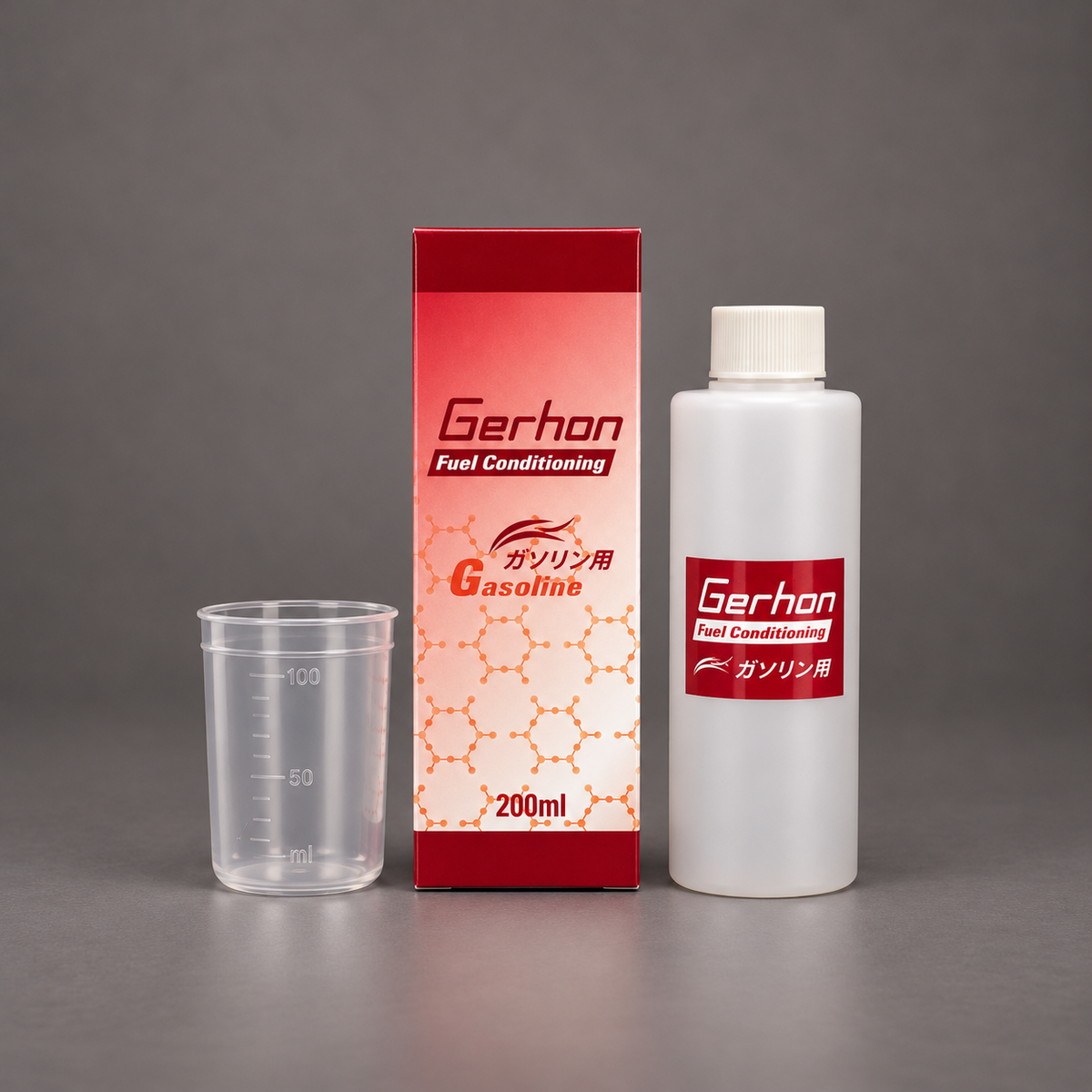
200mL: Measuring Cup Included
A practical size for individual vehicles and motorcycles.
Wash the measuring cup thoroughly immediately after each use. Product left in the cup may become sticky after it dries.
1L: 10mL Measuring Dropper Included
Designed for businesses, commercial fleets, and other uses involving larger fuel volumes. The included dropper lets you measure the amount for one vehicle at a time.
10mL measured with the included 10mL dropper is the specified amount for 20L of gasoline.
Transferring the Product to Another Container
Some plastic materials may be affected by this product. Do not transfer it to another container unless the material has been confirmed as compatible. For the 1L bottle, use the included measuring dropper.
For vehicles that have been in use for a long time
In older vehicles, removal of accumulated gum, varnish or carbon from the fuel system may create a temporary need to inspect or clean fuel filters, injectors or carburetors.
This may occur as the fuel system is brought toward its intended condition.
For older vehicles or those that have not been serviced for a long period, inspection of the fuel system before and after use is recommended.
MADE IN JAPAN
GERHON Fuel Conditioning is manufactured and managed in Japan.
For those who want to keep enjoying the car they care about, fuel offers another starting point.
Condition the fuel before changing the way the car drives.
GERHON Fuel Conditioning
Condition your fuel.
Our blog explains why GERHON takes the approach of conditioning the fuel rather than changing the engine.
Read why fuel conditioning matters when caring for your car over time
Related articles
Fuel additives: types, use, PEA and GERHON
Should fuel additives be used every time? Frequency, timing and excessive dosing
Fuel-additive drawbacks and precautions before use
Does gasoline deteriorate? Changes during long-term storage
Read more about the technology and development
Explore the product background and related information.